

MEDICATION ASSISTED TREATMENT FOR OPIOID USE IS AVAILABLE
Mississippi’s Medications for Substance Use Disorders (MSUD) Program is available statewide to increase access to treatment for opioid and substance use disorder. The program assists individuals seeking treatment — connecting them with statewide navigators and peer support specialists in addition to suitable care, social supports, and post-treatment coordination. The form is open for use by residential treatment facilities and healthcare providers to aid individuals in overcoming treatment cost barriers.
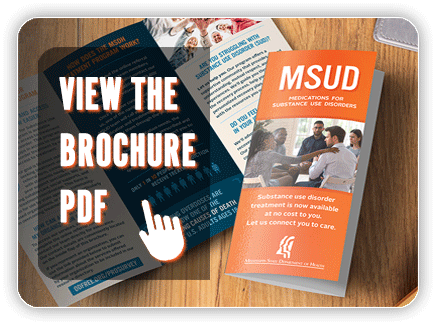
After your initial contact, a treatment navigator from the MSUD team will then call to discuss potential medication and treatment needs, and arrange for them through the program. The MSUD team at the Mississippi Department
of Health will advocate for you throughout treatment and recovery, and help you build a support system. Our
navigators will assist you with goal-setting, coping skills, independent living skills, and developing self-esteem.
And we won’t just support you — we’ll educate your family and friends about MSUD, so they can become a positive part of your journey too.
Locate Help Through SAMHSA
The Substance Abuse and Mental Health Services Administration (SAMHSA), a program of the U.S. Department of Health & Human Services, has a variety of resources for understanding and finding treatment for substance abuse. FindTreatment.gov, 988 Suicide and Crisis Hotline, and the Veterans Crisis Line are all
excellent resource sites to find help. In addition to counseling and behavior-based treatments, some medication-based treatments (see MSDH Treatment box at right) are available for addiction as well as Opiate Use Disorder (OUD), which has become a fast-growing problem in the U.S.